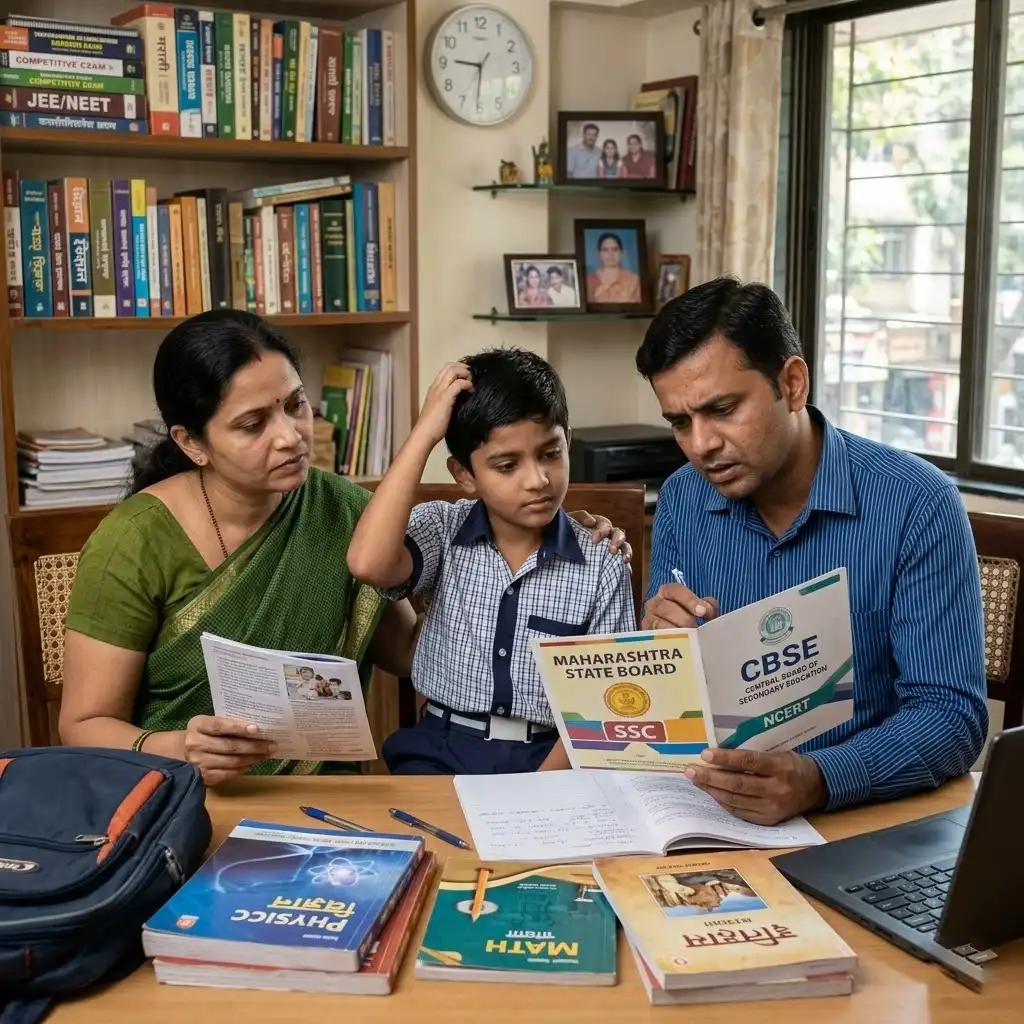
Deciding on a school board in a busy city like Mumbai or Pune is a massive headache for most parents who just want to get things right for their kids. You hear so many mixed opinions from relatives and neighbors that it becomes hard to see the ground reality of what actually happens in the classroom. Many families worry about whether a local approach is better or if the central government system gives a bigger edge for college admissions later on. A proper board comparison in India is not just about which books are thicker but about which style of learning fits your child's personality. Making a choice based on hype alone is a mistake.
The split between curriculum and learning styles
The way these two systems approach a chapter is where you see the biggest divide in daily schooling. While one side sticks to local roots and a descriptive style of writing, the other side pushes for a logic-based application of facts across the whole country. Many parents find that the Maharashtra board syllabus is particularly detailed in the social sciences and local history, which is great for building a strong sense of identity.
- The state system expects students to have a strong memory and the ability to provide detailed answers in long essays during the final written exams.
- CBSE usually focuses on the why and how of a concept, which helps a lot when appearing for competitive tests later on.
- Language learning is a big part of the local board, as making Marathi compulsory helps kids stay connected to their immediate surroundings.
- Using AAS Vidyalaya can help students bridge the gap between these two worlds by providing clear, easy-to-understand digital lessons.
Scoring patterns and the pressure of marks
Everyone wants their kid to bring home a high percentage because that is the only way to get into a good junior college. In earlier times, people thought the local system was a very strict marker, but the CBSE vs state board debate has changed, as both boards have become quite student-friendly recently. Both systems now use internal marks and project work to ensure students are not judged solely on one three-hour paper.
- CBSE exams usually include more indirect or tricky questions that test whether a student has actually understood the logic behind the chapter.
- State board papers are often more direct, so if you have studied the textbook well, you can easily predict the kinds of questions that will come up in the exam.
- Scoring ninety plus is now common in both systems, thanks to the introduction of internal assessments and oral exams for languages.
- Leading e learning platforms in india now offer specific mock tests for both boards, so students know exactly what to expect on the big day.
Choosing the right path for future careers
When it comes to choosing an education board, you have to look 10 years ahead at what your child wants to become. If the goal is to get into an IIT or a top medical college,e then the central path has a natural advantage because of the syllabus alignment. But if you are staying in Maharashtra, then the state board might offer a smoother path for local admissions and CET exams.
- CBSE follows the NCERT books very closely, which are the same books used to set the papers for national-level exams like JEE and NEET.
- The Maharashtra board syllabus is better aligned with the MHT CET, which is the gateway to engineering and pharmacy colleges in the state.
- Students who plan to study abroad later find that international universities more widely recognize the central board.
- Quality e learning platforms in india provide the flexibility to switch or supplement learning if you feel your child needs more depth in a specific subject.
Balancing the cost and accessibility factor
We cannot ignore that private CBSE schools can be very expensive and may not be accessible to every family in every neighborhood. The state board is far more accessible and is the backbone of education across rural and urban Maharashtra. When you are choosing an education board for your kid, you have to consider the financial commitment and the travel time to the school each day.
- State board schools are found in every corner of the state, and the books are very affordable as the government subsidizes them.
- CBSE schools often have better infrastructure, but they come with a much higher fee structure that might not suit every budget.
- The pressure of a heavy bag and long travel is often less in state board schools, as they are usually located closer to residential areas.
- Innovative platforms like AAS Vidyalaya are removing these barriers by bringing the school to the child, regardless of which board they choose.
Conclusion
Finalizing a board comparison in India comes down to knowing your child's strengths and your family's plans. Both systems have their own pros and cons, and neither is perfect for every single student. Whether you pick the Maharashtra board syllabus for its local relevance or the central board for its competitive edge, make sure the child is comfortable. The CBSE vs state board choice should lead to a happy learning experience rather than a stressful one. By choosing education board paths carefully and using the right digital tools, you can ensure your child gets a world-class education right at home.
Common Questions on Board Selection
Q: Which board is better for JEE and NEET preparation?
Answer: CBSE is generally better because the national entrance exams are based on the same NCERT books used in their classrooms.
Q: Is Marathi mandatory in the Maharashtra state board?
Answer: Yes, Marathi is a compulsory subject in the state board to ensure students are fluent in the local language and culture.
Q: Are state board students eligible for central universities?
Answer: Yes, students from all recognized boards in India are eligible to apply for central universities as long as they meet the marks criteria.
Q: Which board is considered easier for scoring high marks?
Answer: Both boards are now equally scoring, but the state board is often seen as more direct, while CBSE requires more logical thinking for top marks.