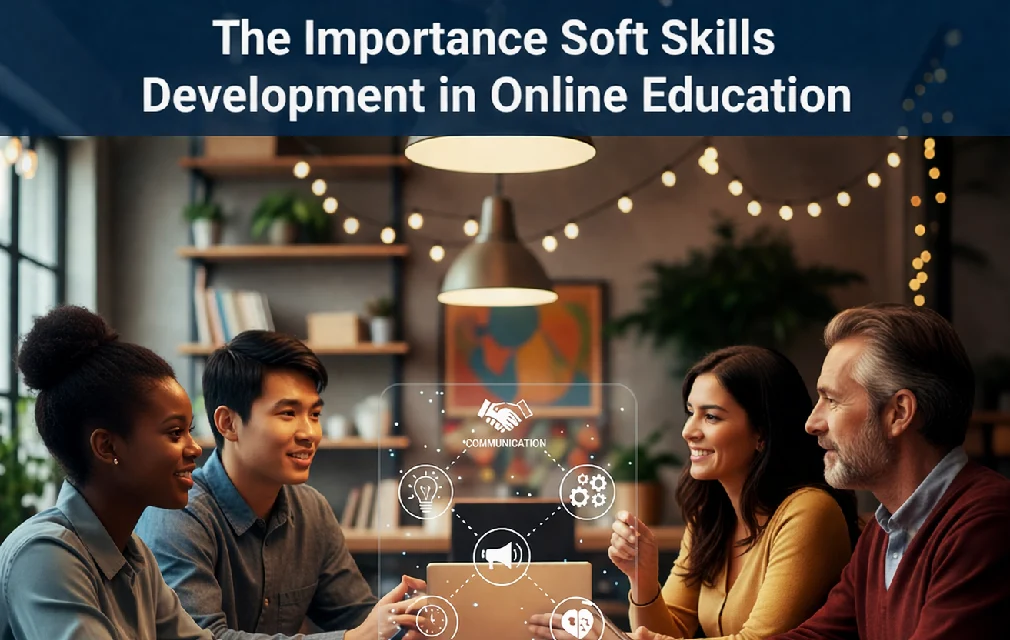
Why do some students excel in group projects, interviews, and leadership positions, while others struggle? The answer lies in areas that aren't covered in textbooks: soft skills development.
In today's digital world, where online learning is common practice, soft skills have become as important as hard skills. Personal and interpersonal skills affect how students interact with one another, work in a team, and adapt to changing circumstances. Online education offers students the chance to learn these skills in a way that is flexible and innovative.
This blog will explore the value of soft skills and how to develop them. E-learning platforms in India also support this growth. Learners can develop their leadership skills, communication, and emotional intelligence through online learning.
Understanding Soft Skills Development
Soft skills development focuses on enhancing personal attributes, which help an individual to be successful in academics as well as in professional life. As opposed to technical knowledge, these skills apply across all subjects and support overall growth.
Online education teaches soft skills through interactive discussions and projects, as well as self-paced learning opportunities. Through this process, students learn to manage their time, express themselves clearly, and understand other people's perspectives within an interconnected digital environment.
The Role of Communication Skills in Students’ Growth
One of the important aspects of soft skills development is improving students' communication skills to be successful. In online learning, effective communication is more important than writing or speaking effectively. It's about listening attentively, providing constructive feedback, and expressing thoughts clearly.
For instance, e-learning platforms in India feature virtual group assignments and discussion boards that let students share their thoughts, work in groups, and discuss their ideas. With educational video content for online learning platforms, students' learning becomes quicker and more engaging. This not only increases confidence but also helps students prepare for interactions in the workplace, in which digital communication is crucial.
Leadership Skills in Education: Building Confidence and Initiative
Developing leadership skills education can help students become more involved in leading their peers and making decisions based on their knowledge. The online platforms help students develop leadership skills through collaborative learning projects and collaboration with peers and mentors.
When students lead an online study group or create a virtual presentation, they are able to think critically, accept responsibility, and maintain emotional stability. These skills can be translated into important advantages when it comes to managing teams in the workplace and managing academic tasks efficiently.
Interpersonal Skills Learning in the Digital Age
Success, be it online or offline, is always based on strong relationships. With interpersonal skills learning, students will learn empathy, respect, and cooperation that are needed for effective teamwork.
Online education encourages these interactions through chat discussions, peer feedback sessions, and video collaborations. The more a student engages in virtual group work, the more he or she learns to collaborate across cultures, time zones, and diverse perspectives.
How does interpersonal skills learning enhance students' outcomes
| Skill Type | Online Activity | Outcome |
|---|---|---|
| Empathy | Group discussions | Better understanding of others |
| Collaboration | Virtual projects | Strong teamwork and coordination |
| Active Listening | Online feedback | Improved communication and trust |
| Adaptability | Remote problem-solving | Enhanced flexibility and creativity |
Emotional Intelligence Development: The Core of Online Learning Success
At the core of effective soft skills development is emotional intelligence development, which is the ability to understand and manage emotions positively. Online education helps students learn to manage stress, remain engaged, and be able to respond positively to challenges.
For example, when students meet deadlines by themselves or handle feedback in a virtual class, it increases both self-awareness and resilience. Empathy is also a key component of emotional intelligence, as it helps students connect even in virtual environments.
Why Soft Skills Matter More in Online Education
Unlike conventional classrooms, online education relies on is built on self-discipline, motivation, and independence.This is why soft skills development is crucial, as these skills ensure that students can effectively communicate, lead with confidence, and adapt to various learning styles.
Students who take part in interactive courses offered on educational platforms online in India learn to develop skills built on real-world experiences that require collaboration, time management, and problem-solving.
Practical Ways to Build Soft Skills in Online Education
Here are ways to develop soft skills while studying online:
- Participate in group activities and work on teamwork and communication.
- Lead discussions with confidence to improve your leadership abilities and increase confidence.
- Reflect on feedback from teachers and peers to develop emotional intelligence.
- Join online forums to practice expressing your opinion respectfully.
When practiced consistently, these habits significantly impact the character of students and their ability to perform in the workplace.
The Future of Soft Skills Development in Virtual Learning
The world of education is quickly moving online. Many institutions are now incorporating soft skills into their curriculum. Most online education platforms in India use videos, interactive tools, and short quizzes that are interactive and short tests to keep learning interesting.
Through AI-based systems providing personalized feedback, students are able to develop skills in communication and leadership. Online learning today is not only about academics but also about holistic personal development
Conclusion
The importance of soft skills development in online education goes beyond digital classrooms. Students are prepared to tackle the real world by gaining confidence and emotional integrity, along with the capability to interact with other people in meaningful ways.
Through reflection, collaboration, and a lot of practice, learners can turn online education into a chance for personal and professional development. Platforms such as AAS Vidyalaya continue to make this change accessible to students from all over the world to provide an all-inclusive and future-ready experience.
FAQ’s
1. Why is soft skills development important for online learners?
Soft skills development helps students build confidence increase their communication skills, and adapt quickly to virtual environments. It improves collaboration, decision-making, and emotional stability crucial to succeed in online learning.
2. How can students improve communication skills through online learning?
Online platforms help develop communication skills that students can use in the real world Through discussions in groups or feedback sessions, as well as videos, students can communicate their ideas in a way that is clear and build better listening and collaboration abilities.
3. What are the best ways to promote leadership skills education in digital classrooms?
Leadership skills development online occurs when students lead projects, manage group discussions, or guide peers through virtual teamwork. This helps them develop responsibility, creativity, and self-control
4. How does emotional intelligence development impact student performance?
Emotional intelligence development teaches students to manage stress, stay focused, and be able to respond effectively to challenges.It helps students develop balance and empathy, which improves both their academic performance and personal development.