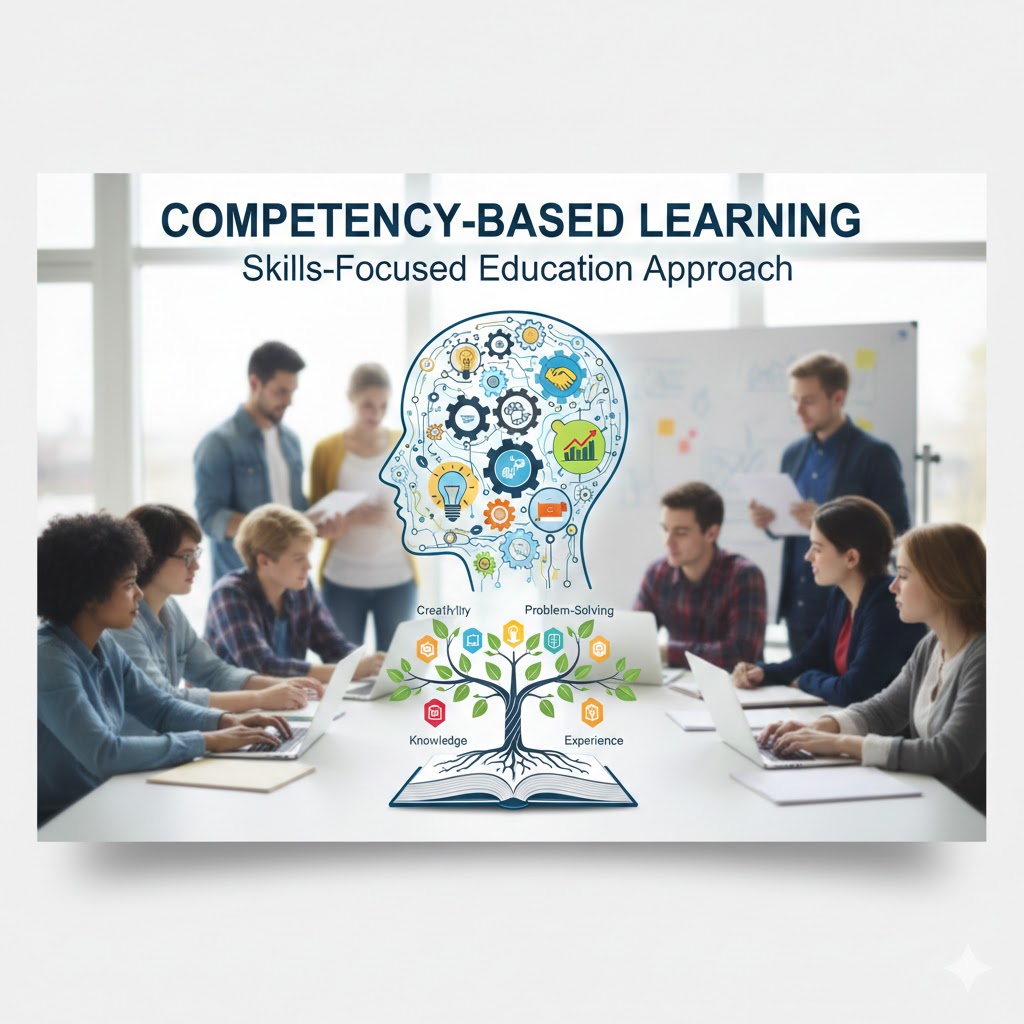
Are you tired of seeing students pass courses without truly mastering the skills? Traditional education often focuses on time spent in class, not actual skills. For decades, learners have been evaluated based on hours spent, tests taken, and grades received
Today, competency-based learning is transforming education by putting mastery and skills at the centre. In this blog, we explore how this approach works, why it’s essential, and how modern learners can benefit from a skills-focused education model.
What Is Competency-Based Learning and How Does It Work?
Competency-based learning is a model that bases student progression on the mastery of specific skills or outcomes. Instead of passing a course based on seat time or grades, learners progress after demonstrating competency in defined tasks.
Think of it as learning to drive: one doesn't get a license just from attending driving school, but from showing they can handle traffic and park safely. Competency-based learning simply takes that principle and extends it to all skills, ensuring learners actually learn useful skills
This model shifts the focus to competency development. Students learn clear, measurable learning goals and achieve success at their own pace, better preparing them for real-world challenges.
Why Skills-Based Education Is the Future of Learning
Companies today prioritise practical skills over degrees. According to the World Economic Forum's Future of Jobs Report 2025, 70% of companies consider analytical thinking essential, with problem-solving and critical thinking among the top skills employers prioritize. This shift underscores the importance of skills-based education.
Here are three main reasons why:
1. It creates a job-ready workforce
Graduates who demonstrate defined skills are hired immediately. Skills-based education decreases the gap between classroom knowledge and real-world requirements. Many online education platforms in India adopt competency-based structures to train students for competitive careers.
2. It supports personalised learning and equity
Students move forward at their own pace. Quick students can go fast, while struggling students receive extra support to reach proficiency. Such a personalised method is a guarantee of equal outcomes and is a great advantage for different student groups, particularly in India's rapidly growing EdTech market.
3. Motivation Through Ownership
Students can observe the direct impact of their efforts on their ability to acquire skills. This creates motivation and engagement, transforming passive learners into active participants in their education journey.
How Outcome-Based Learning Enhances Competency Development
Competency-based systems work just like clear outcome-based learning models; they start with the end goal in mind. Instead of guessing what students should learn, they map out the results first, then design teaching, assessments, and practice to help learners reach those goals
Clear Learning Goals
Learning objectives are clear, specific, and easy to understand, for example, “The student can analyse a financial statement and spot key risks.” This provides learners with a clear picture of what proficiency looks like, assessment methods, and the exact skills needed for success.
Flexible Progression
Time becomes flexible in this model. Learners move through each module only after demonstrating mastery of the required skills, progressing at their own pace. Many e-learning platforms in India already follow this approach to progress self-paced and spend more time on the competencies they still need to strengthen.
Authentic Assessment
Assessments are continuous and practical. Students demonstrate competence by:
- Simulations in real-world scenarios, or case studies.
- Portfolios: A collection of work that demonstrates skill development.
- Performance tasks: Demonstrating skills in controlled scenarios
Multiple attempts and thorough feedback help ensure mastery. The focus is on acquiring skills and not on grades alone.
Core Principles of the Mastery Learning Approach
The mastery learning approach is important to competency-based education. It rests on a simple principle: virtually every learner can master complex material with given time, guidance, and feedback.
1. Deep Understanding
Learners cannot progress without a complete understanding. In case a student obtains a score that is less than mastery, then he/she is provided with feedback and a new chance to show his/her skill proficiency. This iterative method deepens learning over time.
2. Teachers as Coaches
Instructors change their roles from traditional lecturers to facilitators. They provide personalised support, guidance, and targeted feedback. Platforms with educational video content for online learning make coaching scalable, enabling learners to review lessons anytime.
3. Formative Feedback
Constructive feedback highlights areas for improvement while offering a detailed plan of action. Continuous evaluation ensures students progress towards true mastery, reinforcing the skills-based education framework.
Leading platforms like AAS Vidyalaya implement these principles, emphasising verifiable outcomes and organized learning paths for every student.
Global and Indian Trends in Competency-Based Learning
- Global Adoption: According to UNESCO, over 60% of universities worldwide have incorporated competency-based frameworks in at least one program
- India’s EdTech Growth: According to Statista, India's online education market is projected to reach $18.94 billion by 2029, growing at over 23% annually
- Skills Gap: As per the 2023 World Economic Forum report, 45% of employers worldwide have identified that their workforce lacks the skills of critical thinking, digital literacy, and problem-solving. This situation calls for the implementation of competency-focused education urgently.
These numbers demonstrate that competency development and outcome-based learning are not merely trends but essential components of modern education and workforce readiness
Why Competency Development Matters for Your Career
Competency-based education is the most effective way to ensure that learners have skills that can be easily verified and transferred to other areas. In the case of a person preparing for the job market, upgrading their skills, or pursuing higher education, mastery-oriented programs excel by delivering exceptional outcomes.
FAQs About Competency-Based Learning
1. How is competency-based learning different from traditional education?
Traditional education takes learners forward according to grade and time. Competency-based learning employs a mastery learning approach, allowing progression only after demonstrating complete competence in specific skills
2. How is skills-based education different from outcome-based learning?
- Skills-based education:
Skills-based education focuses on skills that students can apply in everyday and professional situations.
- Outcome-based learning:
Outcome-based learning focuses on what students should achieve by course completion, with specific outcomes or competencies defined in advance
- Application vs. Achievement:
Skills-based education emphasizes practice and application, while outcome-based learning emphasizes meeting performance expectations and learning goals
3. What makes the mastery learning approach effective for today’s learners?
The mastery learning approach maintains education's core purpose by requiring students to fully comprehend a subject. It allows learners to learn at their own pace.
4. How does competency development help students?
Competency development helps students build essential skills steadily and boosts their confidence. It fits naturally with skills-based education, guiding learners to apply abilities in real situations. The approach strengthens understanding instead of surface learning.