Introduction
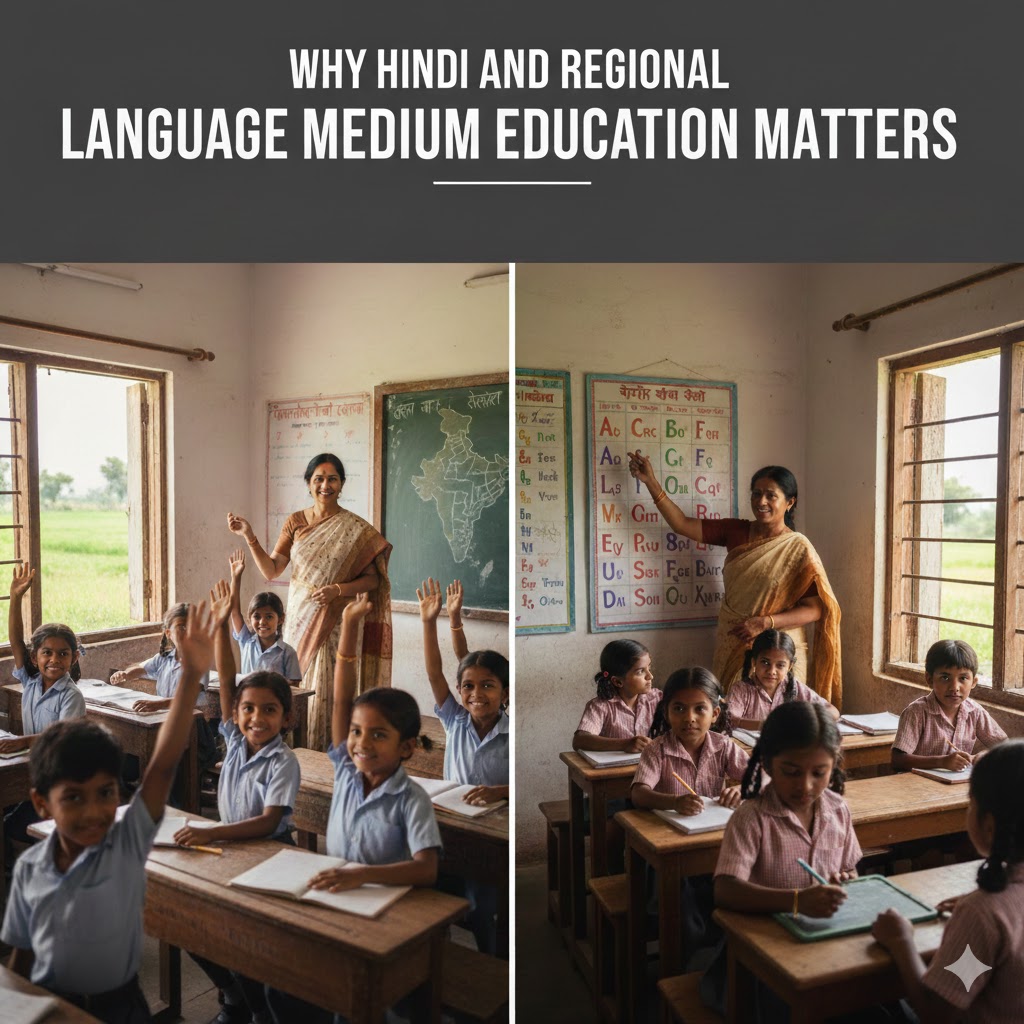
One of the most important decisions for parents is the medium of education their children will receive. Children gain knowledge best when they fully understand the language in which they are taught. Research shows that students taught in their native language develop a stronger understanding, better critical thinking, and confidence.
The roots of Hindi medium education and regional language learning are foundational to effective learning, cultural grounding, and long-term success.
This blog explores how the benefits of mother tongue education can be supported by parents to help children excel academically and socially.
The importance of mother tongue education
Early instruction in your child’s mother tongue is important
According to UNESCO, the literacy level of children taught in their mother tongue is significantly higher, and they are also numerically good by Grade 3 as compared to those children who are learning in a different or second language.
In India, the National Education Policy (NEP) 2020 has recommended that vernacular education should be the medium of instruction at least up to Grade 5.
This helps children understand concepts smoothly, reduces quick learning stress, and builds confidence. Mother tongue education creates a comfortable environment for children to explore ideas without feeling restricted by language barriers.
What are the academic benefits of Hindi medium education
Hindi medium education improves comprehension and retention. Learners who receive instruction in their native language:
- Accelerate the process of understanding complex concepts
- Develop stronger problem-solving skills
- Learn to speak more languages easily
The early understanding gained through the regional language learning creates the base for higher education and improves the likelihood of achieving academic success in the long run.
Cultural identity and social connection
Learning in a native language develops cultural identity. Children connect with stories, history, and traditions of their roots in ways that feel personal and meaningful. Schools that prioritise Hindi medium education follow higher student engagement in classroom discussions.
Mother tongue education also promotes diversity by enabling children from different backgrounds to be involved in classroom activities without language barriers. This connection helps strengthen social skills and emotional development.
Bridging language gaps in a globalizing world
While regional language learning is essential, exposure to English is also important. NEP 2020 encourages multilingual education, allowing children to learn their mother tongue while gradually acquiring additional languages. Studies indicate that students who start with vernacular education and later learn English achieve better overall comprehension than students who begin directly in English-medium schools.
Balancing local and global languages helps children to succeed academically while staying rooted in their cultural heritage.
Digital learning support for mother tongue education
Modern technology goes hand in hand with vernacular education. Using online education platforms in India, students can access lessons, take quizzes, and take assessments in their native language. Interactive video content strengthens concepts, making learning more engaging.
E-learning platforms help children balance regional language learning with gradual exposure to English.
Research shows that students using bilingual digital resources gain retention by 20–30%, while combining the results of traditional mother tongue education with modern tools.
Challenges in vernacular education
Despite its benefits, the vernacular education is not without its difficulties:
- Advanced textbooks and materials in regional languages may be limited
- Teacher training for complicated topics in local languages is in the process of being developed
- Parents often worry about their children struggling to learn English
NEP 2020 promotes multilingual education to address these issues to ensure that children can transition seamlessly between Hindi medium education to English or other languages around the world when they are ready.
Practical steps for parents to support regional language learning
Parents can play a key role in strengthening mother tongue education:
- Make native language reading a pleasurable habit for the child
- Gradually introduce bilingual materials along with regional language learning.
- Rely on a reliable online education platform for systematic lessons.
- Discuss progress with teachers regularly.
A supportive home environment boosts comprehension, confidence, and cultural pride. Small daily practices, like reading stories together in Hindi or regional languages, can make a lasting difference.
Benefits beyond academics
Vernacular education is not just about marks. Children who learn in their mother tongue can :
- Develop stronger emotional intelligence
- Engage better with your peers and teachers.
- Continue to learn for longer periods of time
Studies show that students taught in a familiar language retain conceptual understanding 25% better than peers in non-native instruction, highlighting the importance of mother tongue education for holistic growth.
Why Vernacular Education Works
| Metric / Insight | Significance |
| 40% of students in the world learn in a non-native language (UNESCO) | Shows the disadvantage of ignoring mother tongue education |
| NEP 2020 suggests home-language included until Grade 5–8 | Policy support for regional language learning |
| ASER 2022: Grade 3 literacy improves by 25% with mother tongue instruction | Confirms effectiveness of Hindi medium education |
Conclusion
Hindi medium education and vernacular schooling provide an excellent foundation not just for academic success but also for students' social and cultural integration. As a result of NEP 2020 and aided by modern digital platforms, children can be taught in their own language, with a gradual transition to the English language.
Parents who prioritize regional language learning provide their children with more understanding, cultural pride, and the capacity to continue learning throughout their lives. What can you do to combine mother tongue learning with global exposure to boost your child's level of development?
Make the learning journey simpler for your child by introducing them to AAS Vidyalaya combines the benefits of Hindi medium education and advanced digital learning to ensure an even more confident and safer future.
Frequently Asked Questions (FAQ)
Q1: Why is Hindi medium education beneficial in early grades
It allows children to understand
1. Concepts clearly,
2. reduces learning stress
3. builds confidence
while establishing a strong academic foundation.
Q2: Can regional language learning affect English proficiency?
No. Early mother tongue education builds foundational skills, making it easier for children to learn English later without losing their culture.
Q3: Are quality digital resources available for vernacular education?
Yes. Multilingual lessons with interactive video content for regional language learning are made available through online education platforms like AAS Vidyalaya in India.
Q4: How can parents support mother tongue education at home?
Parents can encourage their children to read in their mother tongue, introduce bilingual materials gradually, supplement the learning process with e-learning tools, and communicate with teachers regularly