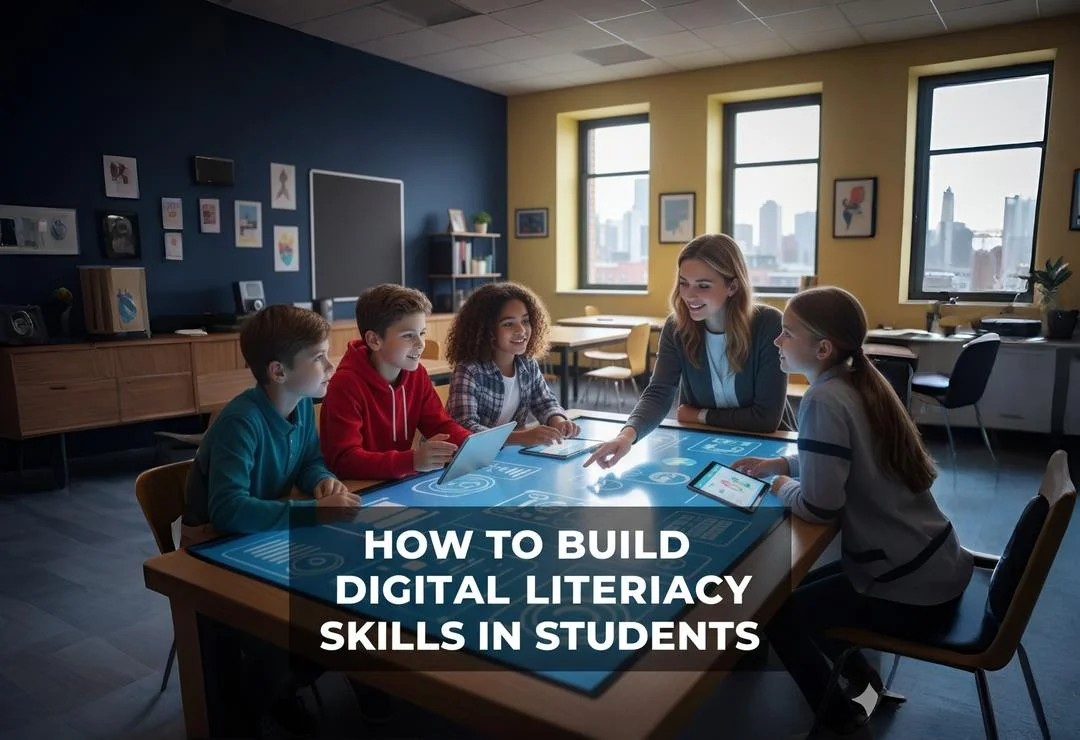
How to Build Digital Literacy Skills in Students
In the modern era, education is more than just textbooks and exams. In a world dominated by digital technology, the ability to utilize technology effectively is as important as academic concepts.
Digital literacy students become a vital component of modern education. Digital literacy prepares students to be responsible, safe and informed digital citizens.
Understanding Digital Literacy among Students
Digital literacy is the ability to evaluate and create digital content. This means that students need to know more than how to use a device. This is about using technology for education, collaboration and self-expression.
Digital literacy students are growing their skills. This is because they can analyze content critically, distinguish between reliable and false information and use online tools confidently. Digital literacy is not optional, but essential as schools and colleges integrate more technology in their classrooms.
Why Digital Literacy is Important in Today's Classrooms?
Globally, schools are moving from blackboards to digital boards and libraries to cloud-based materials. Technology skills education has transformed the way students communicate, learn and engage.
Why is digital literacy essential?
- It bridges knowledge and application.
- This course equips students with the skills that employers are looking for in future employees.
- It promotes collaboration and communication within virtual environments.
- This builds resilience to online threats and misinformation.
Instilling digital literacy in institutions helps to ensure that students aren't just passive users, but active innovators who can shape the future of technology.
Digital Citizenship: What is it?
Digital citizenship is an important extension of digital literacies. It's the practice of using technology ethically and responsibly. Today's students spend a large part of their time online. It is therefore important that they understand digital etiquette.
Digital Citizenship teaches students to respect other members of online communities, protect personal information and use digital platforms safely. These skills help educators cultivate a culture of responsibility and respect in the digital world.
Computer literacy is important for students
Computer literacy importance is still fundamental. Students need to know how essential applications work, how to manage files, and how basic technical problems are resolved. The foundation for advanced digital skills is computer literacy."
For instance, the ability to create presentations or design projects, as well as use spreadsheets to collect data, allows learners to put their theoretical knowledge into practice. Digital education is not possible without computer literacy.
Online Safety Education: Building Awareness
Security is one of the biggest concerns in this digital age. Online Safety Education helps students recognize and avoid risks like cyberbullying, identity theft, and phishing.
Students who know how to protect their devices and report suspicious activities, as well as set strong passwords for them, will build resilience online. Online safety is more than just protection. It is also about giving students the confidence to control their digital presence.
Digital Literacy: Practical Strategies for Building Digital Literacy Skills
To develop digital literacy among students, educators, parents and institutions must take deliberate steps. Here are some strategies that can be implemented:
- Introduce structured technology skills education in the classroom.
- Encourage project-based learning using digital tools.
- Workshops on Online Safety Education.
- Include digital citizenship in your daily teaching.
- Use interactive platforms to promote critical thinking and collaboration.
Students can gain technical knowledge and ethical awareness by combining these practices.
Role of teachers and institutions
Teachers are the main drivers of digital literacy. Teachers should not only teach students how to use technology, but also show them responsible digital behaviors. Schools should invest more in teacher training programs to improve their knowledge of adaptive technologies and emerging technology.
Platforms such as AAS Vidyalaya demonstrate how digital resources support structured, flexible teaching. These tools can be integrated into institutions to empower students with digital literacy.
Parents' involvement in digital literacy
The role of parents is equally important. Monitoring screen time, encouraging balance in technology use, and guiding kids on online safety is part of the process. Parents who use school platforms to monitor their children's performance are partners in the process of raising responsible digital citizens.
Parents can help their children to see technology not as a source of entertainment, but rather as a tool for growth.
Digital Literacy Beyond Schools
Digital literacy isn't just for schools. It is also recognized by corporate training programs and universities. Employers are increasingly looking for candidates who have strong digital skills. This includes problem-solving, adaptability and the ability to work in virtual environments.
This is why institutions need to prepare students for the real-world application of digital literacy, which extends beyond careers and into lifelong learning. AAS Vidyalaya, and similar initiatives, bridge this gap by providing structured digital learning experiences that are accessible to students wherever they may be.
Building Lifelong Learners through Digital Literacy
The ultimate goal in promoting digital literacy, is to develop learners who are constantly adaptable to new technologies. Students who are able to develop resilience, curiosity and problem-solving abilities will always be ahead in the digital world.
Schools and families can cultivate a generation of leaders in a knowledge-driven society by combining digital literacy students, with technology skills education and online safety education.
Final Thoughts
Digital literacy is not an optional skill anymore. It is a fundamental skill that every student must have. Schools can ensure that students understand the ethical and technical side of technology by integrating digital education programs. Every step, from computer literacy importance to online safety education strengthens the foundation for a lifetime of learning.
The emphasis should remain on developing responsible, capable, and adaptable students as technology continues to shape the education system. Teachers, parents, and platforms can work together to help students navigate the digital world and become global citizens.
FAQs
1. What is digital literacy skills for students?
Digital Literacy Students are navigating online resources and analyzing credible information. They also use technology responsibly. These skills include online safety education and digital citizenship.
2. Why is computer literacy important in schools?
The Computer literacy importance lies in laying the foundations for advanced technology. Students can perform tasks such as creating projects, managing information, and engaging in effective learning.
3. How does technology skills education support learners?
Technology Skills Education provides students with the skills of problem-solving and collaboration as well as creativity. It helps them succeed in the digital classroom and their future workplace.
4. Why is it important to educate people about online safety?
Online Safety Education teaches the students how to protect their personal information, prevent cyber risks and practice responsible digital citizenship. This will ensure a confident and safe online presence.