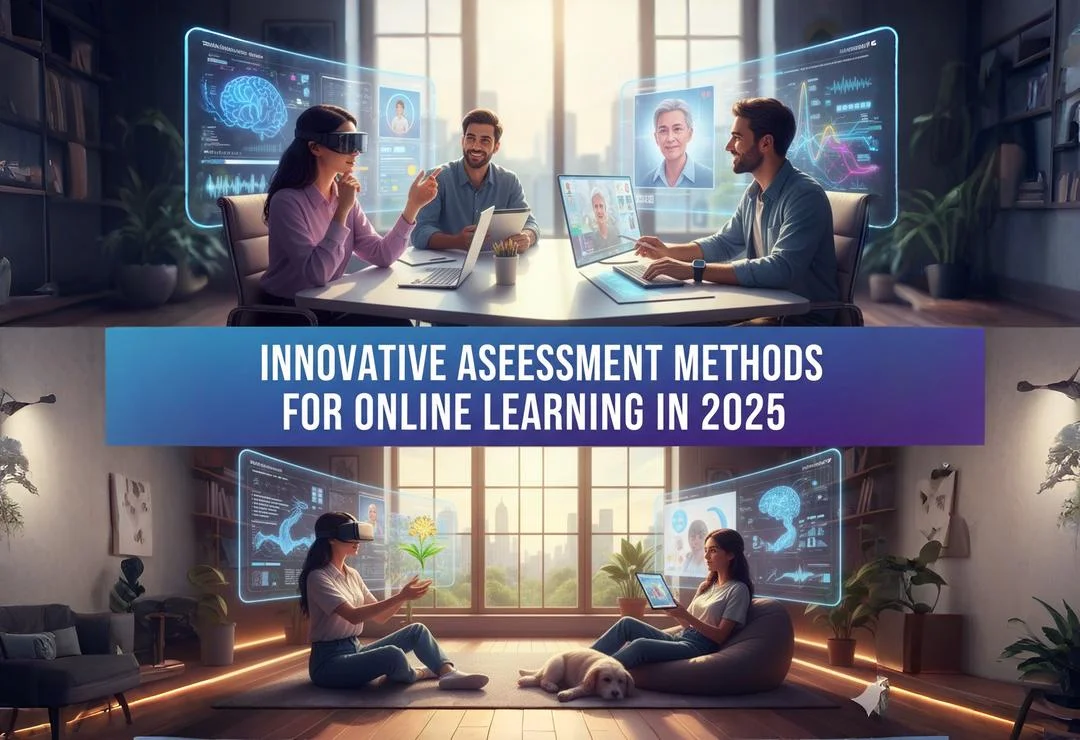
Innovative Assessment Methods for Online Learning
Online education has made education more affordable and accessible than ever before. Student evaluation online is one area where innovation is needed. Virtual environments, in particular, are not suited to traditional exams. Innovative online assessment methods can help educators assess skills, creativity, and comprehension more dynamically and individually.
This guide will explore the latest trends in digital evaluation techniques and alternative assessment strategies that are changing how online students are assessed.
The Shift to Smarter Assessments
Early online assessments were largely based on traditional classroom tests, such as simple multiple-choice quizzes or digital essays. However, educators soon realised that the approach did not fully capture the true potential of a student.
Institutions are now adopting online assessment methods that focus on collaboration, real-world problem solving, and application. These methods do not just test academic knowledge, but also skills such as critical thinking, creativity, and adaptability, all of which are crucial in the digital era.
The educational technology tool that is based on has enabled teachers and students to gain immediate insight into their learning progress through interactive testing environments.
Understanding Online Assessment Methods
Online assessment methods are a digital way of assessing students' engagement and understanding. These methods go beyond the simple "right or wrong" answer and assess analytical thinking and teamwork as well as skill application.
It is important to have an interactive and continuous evaluation, rather than just a one-off exam. Online assessments that are effective offer educators and students real-time feedback, while also being inclusive and data-driven.
Educators can integrate these methods into virtual classrooms with the help of platforms such as AAS Vidyalay.com. This allows them to provide a more personalised experience for each student.
Digital Evaluation Techniques
Digital citizenship is an important extension of digital literacies. It's the practice of using technology ethically and responsibly. Today's students spend a large part of their time online. It is therefore important that they understand digital etiquette.
Some of the major benefits include:
- Instant Feedback: Students receive instant feedback and insight to help them improve their performance.
- Flexible assessment: Teachers can create assessments to fit different learning styles.
- Scalability: A large number of students can easily be assessed simultaneously.
- Enhanced Engagement: Gamified and multimedia-based tests keep learners motivated.
Digital assessments are a key part of online education because they offer these advantages.
Popular Online Assessment Techniques
The variety of online assessment methods allows institutions to select the best method that suits their teaching objectives. Here are some widely used approaches, ranging from simple quizzes up to complex simulations:
- Project-based Assessment: Students apply theoretical knowledge to real-world contexts by working on projects.
- Open-Book Online Examinations: These tests test the student's abilities to research, analyse, and apply, rather than memorization.
- Peer reviews: Students evaluate each other's works, encouraging collaboration and constructive criticism.
- Discussion-based Assessments: Online debates or discussions measure critical thinking and communication abilities.
- Gamified Quizzes: Interactive elements such as badges and leaderboards increase engagement.
This diversity allows learners to be tested not only on what they already know, but also on their ability to apply that knowledge.
Alternative Assessment Strategies
Alternative assessment strategies take centre stage as education becomes student-centric. These strategies emphasise creativity and real-world applications over rote memorisation.
Teachers are designing these assessment tools, like portfolios, video presentations, and journals, to provide students with the chance to demonstrate their understanding in various ways.
These creative assessments are made easier by platforms that offer educational video content for online learning platforms such as AAS Vidyalaya. These tools encourage interaction and help students demonstrate their knowledge authentically.
Online testing tools
The evaluation process has been streamlined and made more efficient by the use of testing tools. These tools automate the grading process, maintain academic integrity, and provide personalized insights for each learner.
Some tools include AI-driven analytics to track progress and suggest learning paths based on performance. This makes sure that assessments aren't just evaluative, but also formative - helping learners to grow.
Combining these tools with digital evaluation techniques transforms assessments into an integrated, data-driven process that improves teaching and learning.
Enhancing Student Evaluation Online
A successful student evaluation online depends on the balance of technology and empathy. Automation is important, but educators must ensure that assessments are inclusive and supportive.
Ideal evaluation involves transparent grading, personalised tasks, and continuous feedback. Smaller, interactive assessments throughout the course, instead of a large final exam, can be used to track progress.
AAS Vidyalaya institutions benefit from structured online environments that integrate assessments and engaging lessons. This promotes both consistency in digital education as well as quality.
How to Implement Assessments
It takes more than tools to adopt innovative assessment methods. You need strategic planning. Here are some practical steps that will ensure a smooth implementation.
- Align assessment with learning objectives
- Give clear instructions on the grading criteria.
- Multiple formats are needed to accommodate diverse learners.
- Encourage creativity and collaboration.
- Analyse data to improve course design.
When used with care, online assessment methods can be powerful tools for tracking learning and not just grades.
The Future of Online Assessments
Personalisation and interaction are the future of student evaluation online. AI, data analytics, and adaptive learning systems are soon to make assessments more predictive, identifying gaps before they even appear.
Immersive tools such as AR and VR allow students to demonstrate their skills in virtual labs or simulations. This gives teachers a holistic view of student understanding.
As digital evaluative techniques develop, education will shift from a test-based system to one that is performance-based -- where learning reflects true ability.
Conclusion
Innovative methods of online assessment have revolutionised the way that we measure learning. Combining digital evaluation techniques with alternative assessment strategies and modern online testing tools allows educators to create more fair, interactive and insightful evaluation systems.
These methods encourage skill-based education, creativity and engagement - essentials for a world that is constantly changing. Platforms such as AAS Vidyalay.com have already led this change, integrating interactive and flexible solutions that redefine the way students are assessed and assisted.
FAQs
1. What are effective online assessment methods to use?
Online Assessment Methods Effective include quizzes and project-based tasks.
2. How can digital evaluation improve learning?
Digital Evaluation Techniques provides instant feedback, reduces bias and enhances engagement through data-driven insights and interactive formats.
3. What alternative assessment strategies are available in online education?
Alternative Assessment Strategies Portfolios, video projects, and reflections encourage creativity while assessing real-world understanding.
4. Why is online testing important?
Online Testing Tools simplify grading and exam integrity. Student Evaluation online supports personalisation to improve learning outcomes.