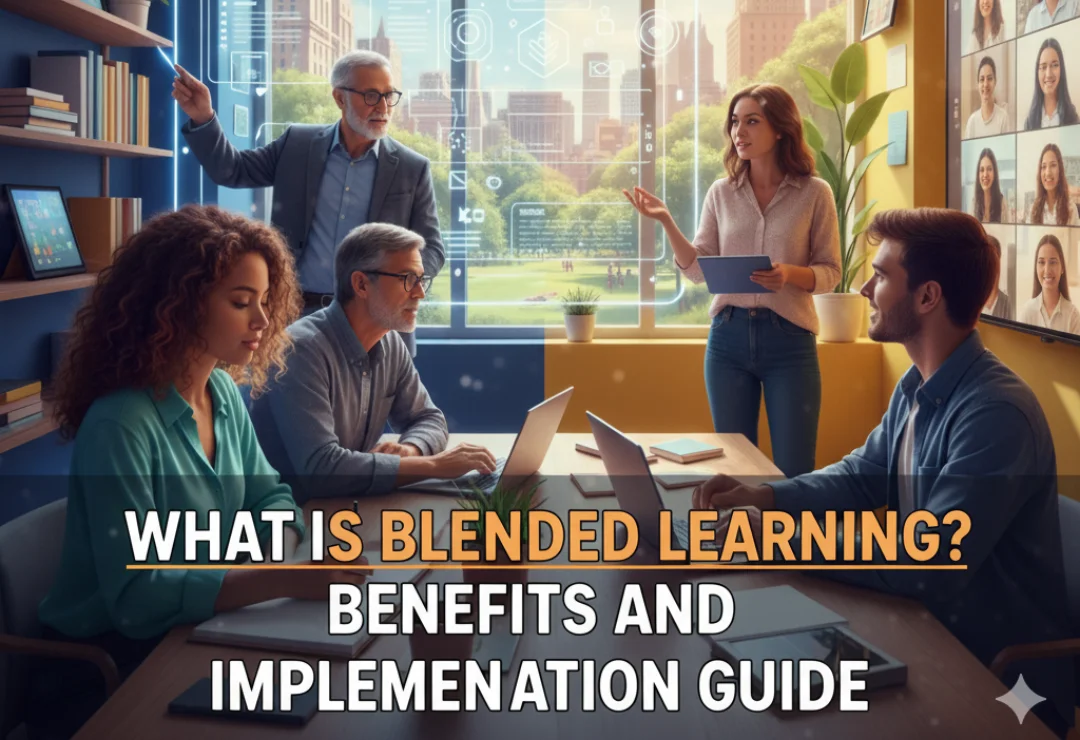
What is Blended Learning? Benefits and Implementation Guide
The education system is currently undergoing a radical transformation. The classroom is no longer confined to four walls, and students are no longer dependent on textbooks alone. Schools, colleges, and training institutions are adopting new learning models with the help of digital tools and innovative methods.
Blended learning is one such model that has been gaining momentum around the world, including in India. Before we dive into its benefits and methods of implementation, let's first answer the question: What is blended learning?
Understanding Blended Learning
Blended Learning Definition is a teaching method that blends online and offline instruction. This is not an alternative to traditional education, but rather a fusion of classroom interaction and technology. The flexibility of digital learning is combined with the benefits of face-to-face instruction.
A hybrid learning model combines the best of both worlds - structured classroom learning and the convenience of digital platforms. This combination allows students to work at their own pace, while also participating in collaborative discussions.
Why Blended Learning Matters Today
While the pandemic accelerated digital adoption, blended learning for schools offers permanent, long-term benefits. The institutions realized that an online offline learning combination offers long-term benefits. The freedom of recorded lectures allows students who struggled with a strict schedule to catch up. Teachers can track student performance better using digital tools.
Parents are now active participants in the education process. Parents monitor their children's progress via apps and platforms. This ensures transparency.
Key Benefits of Blended Learning
The blended education benefits go beyond flexibility. Blended learning for schools improves the quality and prepares students to live in a world where technology is a major factor. Some blended learning strategies include:
- Personalized learning paths: Digital platforms can analyze student performance and suggest specific lessons to help students improve weak areas.
- Engaged audience - Interactive tools such as quizzes and videos hold the attention better than passive notes-taking.
- Cost-effectiveness - Schools can save money by moving part of their curriculum online, while maintaining the in-person experience.
- Skills development - Students develop time management skills, digital literacy and independent research, which are essential for future careers.
- Revision of online material along with classroom instruction can help students retain concepts for longer.
How the Hybrid Learning Model Works
The hybrid learning model can be adapted to different educational environments. And several blended learning strategies can guide for example:
- Students rotate between classroom activities, online modules and other classes.
- Flexible model - Most content is delivered online with in-person teacher support.
- The Enriched Virtual Model is a largely digital model that includes occasional classroom sessions.
The approach chosen depends on the goals of the institution, the infrastructure and the age group of the learners. However, all models maintain the core blend of digital technology and human interaction.
Implementation Challenges and Solutions
Blended learning education is not without its challenges. Connectivity may be a problem in schools located in semi-urban or rural areas. Teachers must be trained to use digital tools effectively. Parents are also concerned about balancing screen time with physical activity.
To ensure inclusiveness, institutions must close these gaps. These challenges can be overcome by implementing blended learning strategies teacher training programs and affordable internet access.
Step-by-Step Implementation Guide
Blended learning for schools is not something that can be implemented overnight. It requires planning and careful consideration. Follow these steps to implement blended learning successfully.
- Assess readiness: Evaluate the digital infrastructure, Internet access and device availability.
- Train educators – Conduct workshops to teach teachers how to create engaging digital content.
- Choose the right tools: Learning management systems (LMS), video platforms, interactive apps and interactive apps should all be aligned with curriculum requirements.
- Blending strategically - Determine which lessons can be taught online and which require face-to-face interaction.
- Analyze student progress using analytics on digital platforms.
- Feedback - Take input from parents and students to improve the approach.
Blended Learning Beyond K-12 Education
Blended learning does not only take place in classrooms. Corporate training programs are increasingly using an online offline learning combination for employee upskilling. An employee could, for example, complete digital modules about compliance and then attend a workshop in person to apply the knowledge.
This model is also ideal for professional certifications, as it combines flexibility with accountability. Hybrid formats are used by universities that offer distance education to give students global exposure, without geographic constraints.
The Future of Blended Learning in India
India's digital education sector will grow faster than expected. Digital India, EdTech partnerships, and other government initiatives help to facilitate seamless adoption. As more institutions adopt the hybrid learning model, the focus of education will shift.
Parents and teachers are able to prepare their children without losing the human touch in teaching. Students can choose when, where, and how they learn.
Technology's Role in Blended Learning
Blended learning is only as successful as the technology that supports it. Modern tools, such as adaptive platforms, AI-driven analytics and learning management systems make it easy to create customized lessons. Virtual classrooms encourage collaboration while cloud-based material is accessible anywhere.
Immersive tools such as augmented reality (AR), virtual reality (VR), and holographic technology (HOL) transform the hybrid learning model, to make complex topics more interactive and understandable. This shows that online offline learning combination can lead to better engagement.
Conclusion
What is blended learning, then? Blended learning is an evolution in education that embraces digital platforms while respecting the value of the traditional classroom. This fusion, when implemented correctly, creates an environment that encourages students to not just memorize, but also understand, apply and innovate.
Blended learning is flexible. It can be customized to meet the needs of schools, universities, and businesses. A NGO like AAS Vidyalaya makes conscious efforts to overcome these challenges, blended educational benefits can shape a new generation that will not only be academically strong but also technologically agile.
The future of blended learning for schools is now. The sooner institutions adopt this shift, they will be better equipped to prepare learners for an ever-changing world.
FAQs
1. What is the difference between blended learning and hybrid learning?
Blended Learning is a method of teaching that integrates online and offline experiences. This allows students to gain the benefits of both digital flexibility and classroom interactions. The blended learning definition is centered on integration. A hybrid learning model refers to teaching that occurs both online and in person at the same time.
2. What are the benefits of blended learning for students?
The key blended education benefits include:
- Flexible schedules as students to better manage their time.
- Lessons are tailored to suit different learning styles.
- Interactive tools can increase engagement.
- Students can review online lessons in conjunction with classroom discussions.
3. How does online and offline learning work in practice?
The online offline learning combination allows students to learn digital modules such as videos, quizzes, and assignments while using classroom sessions that allow for more in-depth discussions, labs, and hands-on exercises. This balance allows learners to understand concepts and apply them in collaborative settings.
4. What are the challenges that schools face in implementing blended learning?
The blended learning definition is not without its challenges. Teachers may need training on how to effectively use digital tools, while parents are concerned about the balance between classroom learning and screen time. It is important to overcome these obstacles to successfully adopt the hybrid learning model.