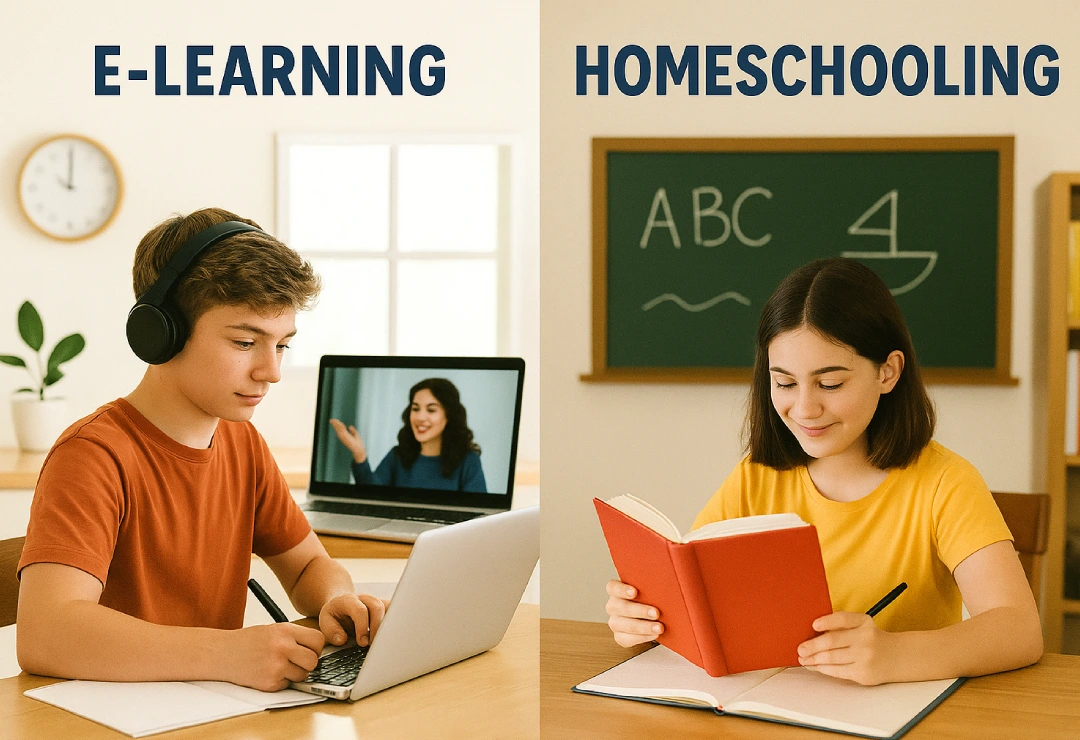
What Is the Difference Between eLearning and Homeschooling?
In the digital age, terms like "eLearning" and "homeschooling" are often used interchangeably. While both offer learning outside traditional classrooms, their structures, methods, and student experiences differ significantly."
This post will explain what each approach is, how it works, and which one might be better for your child's learning goals. Understanding the differences between eLearning and homeschooling is crucial for students, parents, and educators making educational choices."
What is eLearning and how does it work?
To understand the difference between e-learning and homeschooling, it's important to define what e-learning is. E-learning refers to education delivered electronically, typically through the internet, using digital tools such as videos, live classes, quizzes, and learning management systems (LMS). It can be a part of an official school program or a self-directed learning initiative.
The main characteristic of eLearning is its technology-driven content delivery. Students typically follow structured curricula developed by educational professionals, with lessons delivered through platforms like educational websites, apps, or online schools."
Common features of eLearning are:
- Interactive video lessons for engaging content delivery
- Digital assignments and assessments for progress tracking
- Scheduled live sessions with qualified instructors
- Online forums and group chats are a great way to collaborate with peers
Today, many schools have hybrid models, where classroom teaching is supplemented by e-learning modules. This allows students to access lessons at any time and from anywhere.
What Is Homeschooling, and How Does It Work?
Homeschooling is an educational alternative where parents teach their children at home instead of sending them to traditional schools. Homeschooling is legal in many countries and widely accepted. Families often tailor the curriculum to their educational philosophy, religious beliefs, or learning pace.
Homeschooling is a method of education where parents and guardians are responsible for the planning, delivery, and assessment. While some families incorporate online resources, homeschooling doesn't require technology-focused approaches. It can include traditional textbooks, educational field trips, and community learning groups.
Key aspects of homeschooling:
Online learning is more flexible than traditional classrooms, where the teaching style is usually one-size-fits-all.
- Parent-led or tutor-guided instruction
- Flexible schedules tailored to individual learning pace
- Family-selected curriculum based on educational goals
- Individualised focus on each child's interests and strengths
- Project-based and experiential learning approaches
omeschooling is highly customisable but also requires a lot of time, commitment, and resources on the part of parents.
eLearning vs Homeschooling: The Key Differences
Let's explore the difference between e-learning and homeschooling. Both eLearning and homeschooling represent departures from traditional brick-and-mortar schooling models
1. Authority and Control
- E-learning: Guided by educational institutions and professional educators, with students following structured syllabi and earning official certifications.
- Homeschooling: Curriculum choices reflect family preferences, with instruction led by parents or hired tutors.
2. Structure and Curriculum
- Students use structured online material, including timelines, assessments, and teacher interactions.
- In homeschooling, structure is flexible. Some families use national boards, while others design their learning paths.
3. Use of Technology
- eLearning relies heavily on digital platforms to deliver, assess, and communicate.
- Homeschooling can use or not use technology. Homeschooling can be done completely offline or with online tools.
4. Accountability and Assessment
- eLearning platforms provide regular feedback and assessments to track progress.
- Homeschooling relies on parent-led methods of assessment or third-party evaluations unless the child is enrolled in an official home-based program.
5. Social Interaction
- Virtual group work, webinars, and student communities are all part of eLearning.
- If families do not join local networks or co-ops, they may only have limited interaction with other homeschoolers.
Which One Is Better?
No one answer fits all. The answer depends on a learner's goals, their family situation, and their needs.
- eLearning can be a great option for anyone who wants to learn in a structured and self-paced manner with expert guidance but without the rigidity that comes from physical schooling.
- Homeschooling provides maximum flexibility and individual attention but requires high involvement and careful planning from parents.
Platforms like AAS Vidyalaya are ideal for working parents and those living in remote areas. They combine the benefits of eLearning while allowing flexibility at home. AAS Vidyalaya offers CBSE-aligned material, live classes, and features to help students solve their doubts.
The Role of Teachers and Parents
Homeschooling is a form of education where parents are the teachers. They plan lessons, monitor progress, and customize the education according to the child's needs. Parents play more of a facilitator role in e-learning. Parents help to set up schedules and offer emotional support. However, the actual teaching is done by online instructors or structured platforms.
Cost and accessibility
- The cost of eLearning can be lower than that of traditional schools, and it is accessible on smartphones or tablets.
- The costs of homeschooling can be very different. Some families invest minimally, while others spend a lot on specialized tutors or materials.
AAS Vidyalaya, an educational platform that offers cost-effective access for students in India to school content recognized by the government, further reduces barriers. This is especially useful for rural learners or those in underserved areas who want to study from home
Final Thoughts: eLearning or Homeschooling?
If you're looking for curriculum-based digital learning with minimal setup, eLearning is the way to go. If you are looking for curriculum-based, expert-driven digital learning that requires minimal setup, then eLearning may be your best option.
Whatever path you choose, your goal will be the same: empowering, self-driven education that is adapted to the child's needs and pace. Both options are more accessible now than ever before, thanks to platforms and technology like AAS Vidyalaya.
FAQs on the Difference Between eLearning And Homeschooling?
1. Is e-learning better than homeschooling?
You can control how your child learns when you homeschool them. You can choose based on what your child needs and how well you can handle home learning.
2. Is it possible to use eLearning while homeschooling?
A lot of families who homeschool use e-learning to add to what they are already learning. It gives you knowledge about the subject and helps you keep track of your progress.
3. What problems do people have with homeschooling?
Homeschooling takes a lot of time, needs to be planned out, and can make it hard for kids to interact with each other. With the right tools and help from the community, these problems can be solved.
4. Do people know about eLearning sites like AAS Vidyalaya?
AAS Vidyalaya and other platforms like it work with national boards to offer CBSE-based education online. This makes them a good choice for Indian students.